Mostafa Milani

Research directions

Projects

Building the foundations and tools for trustworthy, understandable data systems.

01

Quality · Privacy · Fairness

Responsible Data Preparation

How can we improve data without compromising the people it represents?

Data cleaning, imputation, and synthetic data generation shape what a model learns. This research develops methods that account for data quality, privacy, and fairness together. Recent work uses conditional independence to guide optimal-transport repairs and private data synthesis, examines bias in entity matching, and evaluates whether imputation methods express uncertainty reliably.
Conditional independenceDifferential privacyUncertainty
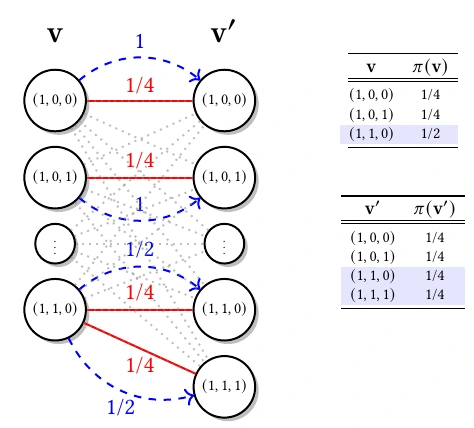
A probabilistic transport plan linking original and repaired data tuples.
Figure 2: Graphical representation of the probabilistic transport plan for the example database.
02

Language models · Provenance · Visual exploration

Data Understanding and AI Assistance

How can people and AI systems make better sense of data?

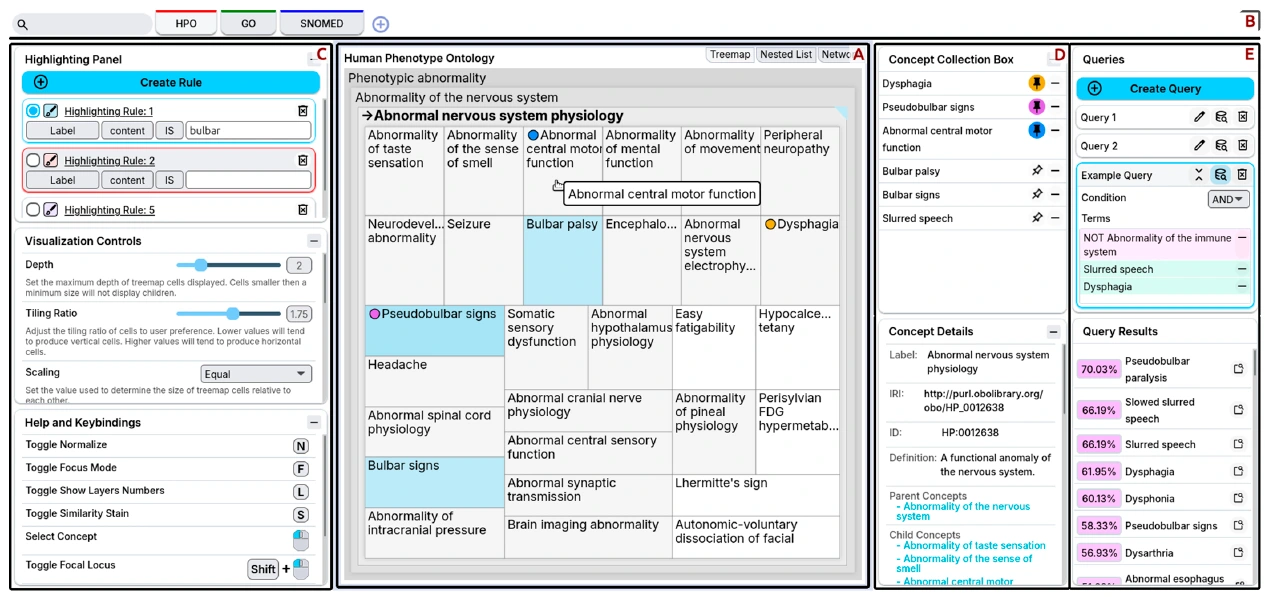
This research studies the tools and evidence people need to query, explain, and explore data. Recent work evaluates how well large language models understand SQL, estimates the contributions of database tuples using relation-aware Shapley sampling, and supports ontology exploration through fuzzy embeddings and visual query building. A complementary study examines how human preferences and cognitive biases affect data-cleaning decisions.

SQL understandingData attributionHuman–AI interaction
FuzzyVis interface showing ontology visualizations, concept details, and the query builder.
Figure 9: An overview of the FuzzyVis interface.
03

Existential rules · Chase termination · Query answering

Scalable Reasoning with Database Constraints

When does rule-based reasoning finish, and how can we check efficiently?

Existential rules express relationships and knowledge that go beyond stored database records. Applying these rules through the chase can create an unbounded computation. This research combines theoretical analysis, practical algorithms, and experimental evaluation to decide chase termination for linear rules and broader rule classes. It builds on work on tractable Datalog extensions and ontology-based query answering.

Chase terminationDatalogOntology-based data access
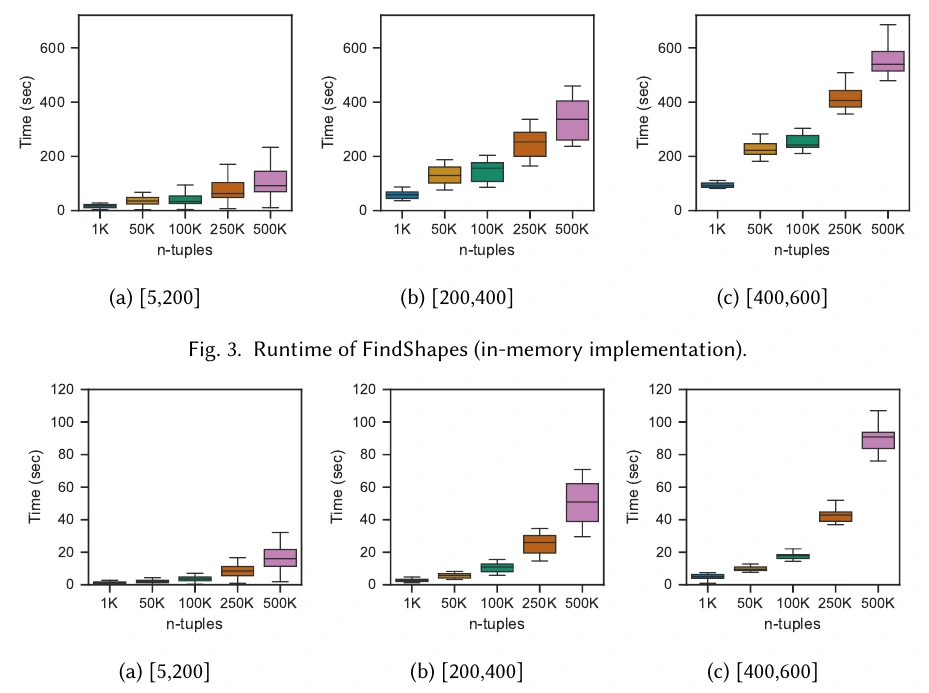
FindShapes runtime, comparing in-memory and in-database implementations.
Figures 3–4: FindShapes runtime, comparing in-memory and in-database implementations.
Read paper ↗